
Where St. Louis County Arrest News Appears
Good coverage keeps its facts straight. It names the agency, the court, the date, and the exact charge wording. St. Louis County has a split that matters here. County Police handle primary law enforcement, while the Department of Justice Services runs the jail and intake. A County Police release can shed light on a public case. But it never becomes a jail roster just because it names an arrest or shows a booking photo.
A story might center on Florissant, Chesterfield, Clayton, or another town. The headline alone won't tell you who made the arrest. It won't say where the person is held either. Look for the credited department inside the story. Then compare it with the court case or a newer agency response. News tells you something was reported; the official source confirms the underlying record. The STLtoday Crime and Courts section is a solid newspaper entry point for story-driven coverage. Expect breaking events and court proceedings there, with some material behind a paywall. A section page is never a full account of county bookings.
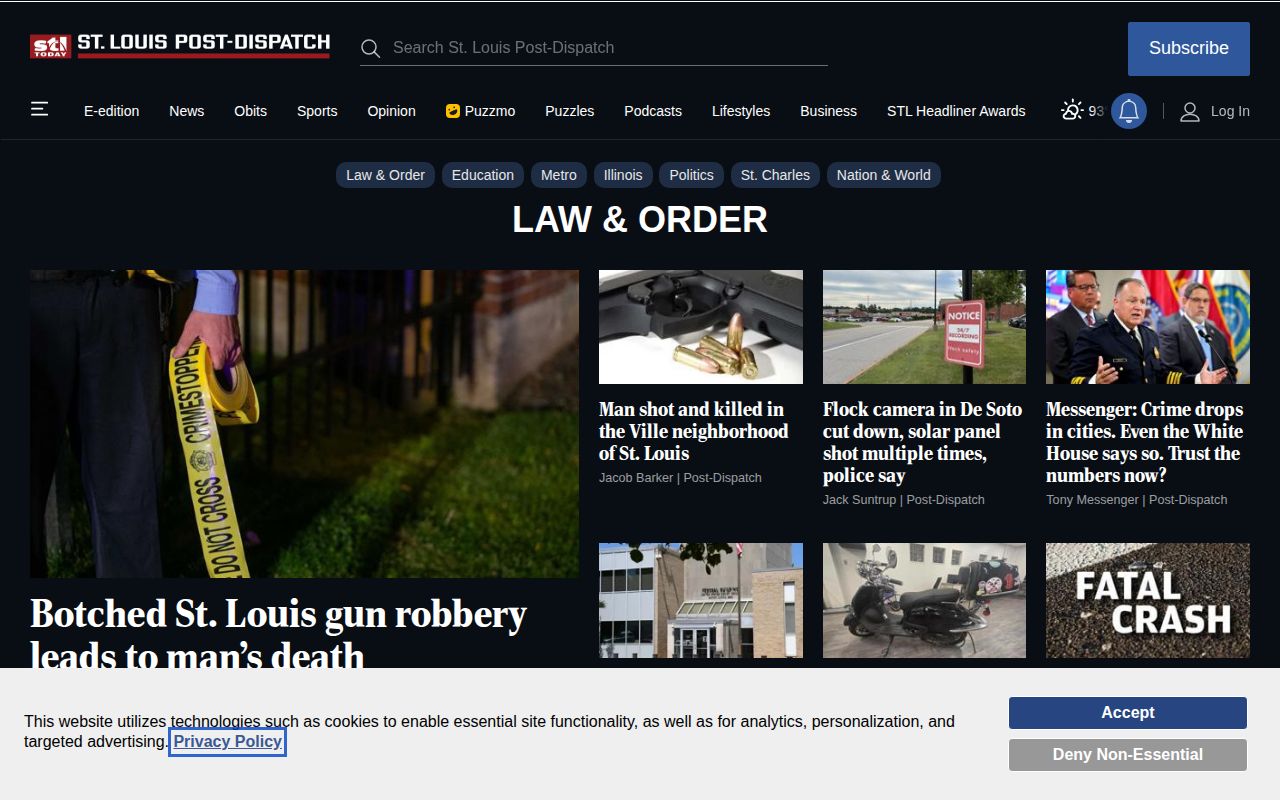
Newsroom coverage moves fast. A story can track a breaking arrest or follow the case into court, which is useful. Just know the limits. Paywalls block some articles, and a section page won't capture every county booking.
Official St. Louis County Sources Come First
Go to the record-makers first. County Police press releases are the official word, though selective. A single release may lay out charge details, probable cause, bond information, and on occasion a booking photo. Not every arrest gets one. Timing depends on charging decisions or whether the agency wants to speak publicly.
For a same-week Highway Patrol arrest, the Missouri State Highway Patrol arrest search is a separate and narrow tool. You can search by first and last name, arrest county, troop, city or state, and arrest date. Reports post automatically. They vanish after five days. The system covers MSHP arrests only, with no booking photos, so a St. Louis County query there won't return the full county picture.
Justice Services, at the Buzz Westfall Justice Center, handles custody and booking questions. Its official pages offer no public, countywide searchable booking roster with current photographs. So a press release, a court file, a custody check, and an old news story can each show a different piece of the same event. None of them alone tells the whole story.
St. Louis County News Outlets and What They Cover
Local outlets come next, as sources of leads and public context. Coverage here is event-driven. A photo might come from an agency, a staff reporter, video, surveillance footage, or not appear at all. Look for two things in any story. Where did the information come from, and when did it run? The table below notes each outlet's entry point and its limits. None of these outlets is an official record custodian.
| Outlet | Coverage | Photos? | Where |
|---|---|---|---|
| STLtoday / Post-Dispatch | Crime and courts stories, court proceedings, and public-interest cases. | Varies; may depend on police, prosecutor, court, or reporting material. | Crime and Courts |
| KSDK / 5 On Your Side | Breaking and follow-up local crime reporting. | Varies by story and video package. | Crime |
| FOX 2 St. Louis | Frequent selective Missouri breaking-news coverage. | Not guaranteed to be a booking image. | Missouri news |
| KMOV | Event-driven local news and public-safety stories. | Varies with the report. | News |
| St. Louis Public Radio | Longer court, policy, and accountability context at lower volume. | Not a guaranteed feature. | St. Louis Public Radio |
| Riverfront Times | Selective regional crime, courts, and public-interest reporting. | Varies by story. | News |
| St. Louis County News | Sporadic county-focused local coverage. | No verified daily booking or mugshot section. | St. Louis County News |
| Real STL News | Frequent crime and courts inventory with local updates. | Varies and needs origin checking. | Crime and Courts |
St. Louis Public Radio goes deeper than most breaking reports. Its local reporting homepage is the place to start for that longer-form coverage.
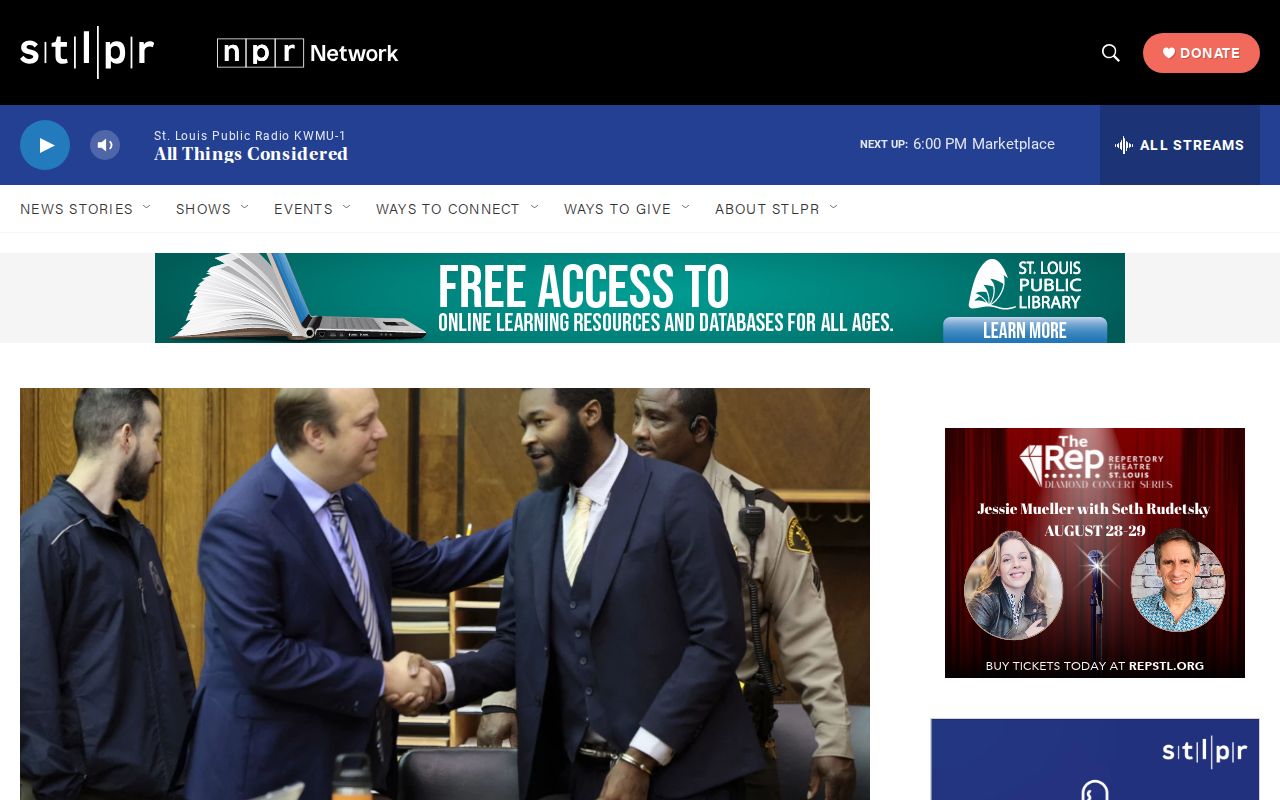
Context has its uses. It helps a reader follow policy fights and accountability stories down the road. What it won't do is show you who sits in a county jail right now.
Local News Is Selective, Charge-Driven Coverage
None of the major outlets covering St. Louis County operates as a full booking feed. Editors pick stories for reasons that have little to do with completeness. Charging decisions, public safety concerns, court filings, and plain newsroom judgment all shape what gets printed. Plenty of arrests never earn a mention. Others surface only after prosecutors file charges.
So treat every clipping as a starting point. Save the story date, the named agency or court, the city, and the exact charge wording. Note whether a photo actually ran with the piece. Then let the official case record carry the story forward, since charges can change, fall away, or resolve in court.
How Booking Photos Reach St. Louis County News
Someone booked at the Justice Center gets photographed during intake. The county's internal system, called IRIS, exists for identification by authorized staff. It is not a public gallery. Official release follows one narrow pattern only. County Police may attach a booking photo to a press release about a charged case. That pattern promises nothing else. No photo for every person booked. No set window for how long an image stays up. No blanket permission for media reuse.
A photo beside a news story may come from somewhere else entirely. Outlets use surveillance footage, file images, courtroom sketches, or material police hand over. Some stories run no picture of the person at all. Check the source and date of any image. That's the only way to know it reflects current custody or a case outcome. Booking photos stay with the agency or outlet that published them rather than being copied here.
From St. Louis County News Story to Official Record
A news article can hand you real leads. It may name the arresting agency, give a date and city, cite a charge, or point to a court case. Treat those details as starting points. The path below separates three situations that get blurred in headlines: someone just booked, someone released, and a case already resolved in court. For the full picture of where booking and custody records live, see the St. Louis County records guide.
- Record the outlet's date, the named agency, the city or location, and the exact charge language.
- Check the issuing agency's official release or contact route for a public update and source confirmation.
- For a current county-custody question, ask Department of Justice Services what official lookup or request route is available.
- Search Missouri Case.net for the filed case, then read the court, charge, and disposition entries.
- Use the court outcome to update the understanding of the original story rather than assuming an arrest report describes the final result.
A missing record proves nothing. The story may still be accurate, yet the paperwork sits behind a name spelled differently, a matter never filed, a different jurisdiction, a sealed file, or a juvenile case. Release, transfer, or a simple source error can also explain the gap. Name-matching alone is risky. Confirm with the office that actually handled the case before drawing any conclusion.
St. Louis County Custody and Case Status Timeline
One headline rarely captures the whole process. Coverage tends to compress weeks of custody and court activity into a single update. That makes it easy to read a photo as a final result. The timeline below splits the major status points apart, so each stage stands on its own.
| Status point | What it can mean |
|---|---|
| Arrest reported | An agency or outlet reports an charge or custody event. It is not a court finding. |
| County intake or custody | Justice Services may hold booking or custody information if the person was conveyed to county intake. |
| Released or transferred | A person can leave county custody while a booking record, story, or court case remains. |
| Case filed or pending | Case.net may show court activity, charges, bond, and later filings once a case is available. |
| Disposition | The court's recorded result is the place to determine the case outcome. |
This sequence is why checking Case.net matters after any recent story. A dated third-party image, an older outlet report, and the current court docket can each describe a different moment in the same record. They are not necessarily in conflict. They simply cover different points along the path.
Secondary Mugshot Archives Require Official Confirmation
Beyond the official and news channels sit commercial mugshot archives. Arrests.org offers a dated search and archive for St. Louis County. Mugshots.com hosts a county-local archive with city links and says removal happens through expungement at no charge. Neither site answers to the county, reflects a current Justice Services roster, or guarantees complete, current listings. Think of them as leads. Answers come from the agency or court that holds the actual record.
Not every archive fared as well in checking. RecentlyBooked showed no verified St. Louis County section in its Missouri list. Busted Newspaper had no confirmed county-local page, and Mugshots.zone turned up nothing local. Nearby Missouri counties should not be substituted just to fill those gaps. No commercial archive is linked here, and any entry found on one needs confirmation through the original source.
City Reporting Has St. Louis County Limits
City records are not county records. Clayton posts weekly incident reports and Chesterfield publishes recurring crime-report documents, but neither amounts to a public photo roster. Florissant showed no verified daily photo blotter. A city story still helps with basics like an incident date or an agency name. It just cannot answer every question about who is in county custody right now.
When an event connects to a mapped city, the Florissant records guide lays out the local boundary and the county follow-up path. The same approach works countywide. Start by identifying the arresting agency. Then turn to Justice Services for custody questions and Case.net for the court result.